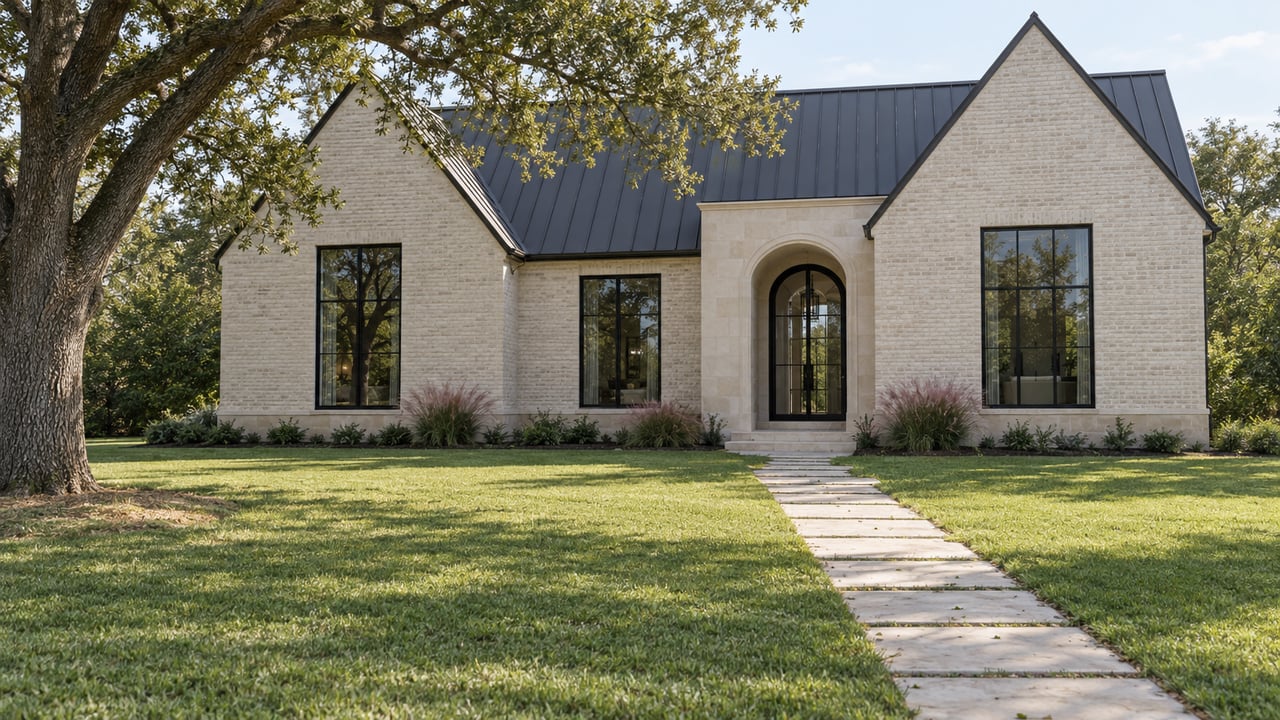
According to Community Impact, the first three times a developer asked Colleyville to rezone 13.84 acres near Pool Road and Wilkes Drive from agriculture to single-family residential, the city council said no. Neighbors had organized under the name Save Colleyville Trees, raising concerns about erosion and runoff into nearby creeks. The city had even explored buying the land itself through a partnership with the Trust for Public Land, a deal that could have cost Colleyville upward of $3 million and never came together. On the fourth vote, in August 2024, the council approved the project 7-0, but only because state rules required a supermajority after the earlier denials. The plan that finally passed had shrunk from 19 lots to nine.
That project, now marketed as The Bluffs at Colleyville, is not an outlier. It's the clearest example of what's happening to the last unbuilt acreage inside city limits, and it explains something the citywide median price doesn't: the real cost of a large, private lot in Colleyville has less to do with the market average and everything to do with which of three active subdivisions you're competing for a spot in.
Why a Developer Fights Four Times for Nine Lots
Colleyville has built out most of its land over the past several decades, and what's left tends to be exactly the kind of large, wooded, agriculturally-zoned tract that drew people to the city in the first place. That scarcity is precisely why a developer would sit through years of hearings and three rejections rather than walk away from 13.84 acres.
City Manager Jerry Ducay told the council during the final hearing that the trees on the Bluffs site were mostly post oak and blackjack oak, species he said weren't sustaining much bird life. Mayor Bobby Lindamood pushed back publicly on social media suggestions that the council had been persuaded by anything other than the merits of the revised, smaller plan. The friction wasn't procedural theater. It came from real neighbors worried about drainage onto their property, a concern that showed up again a year later on a different project.
The Floor Price Just Reset
While the Bluffs fight was playing out, two other large parcels moved through the same process with far less drama, and they show what developers now believe this land is worth once it's subdivided.
- Holt Farms: 11.8 acres at the intersection of Bandit Trail and John McCain Road, rezoned in May 2025 and platted that November. Calais Custom Homes is building 10 lots there, with homes starting at $2.5 million.
- Park Hill: a 16-lot development on half-acre homesites, also starting at $2.5 million, built by Graham Hart under community manager Jerrod Goff.
- The Bluffs at Colleyville: nine one-plus-acre wooded, gated homesites on the 13.84 acres described above, with home construction scheduled to begin in the final quarter of 2025.
Run the math on Holt Farms alone. Ten lots at a $2.5 million floor is at least $25 million in eventual home sales generated from land that, sold whole as a single large-lot estate, would have fetched a fraction of that. Park Hill's sixteen lots at the same floor clears $40 million. That gap is the entire reason raw acreage in Colleyville doesn't get listed as one big lot anymore. A developer who subdivides captures far more value than one who sells the land intact, and every remaining large tract in the city is now a candidate for the same treatment.
What Raw Land Actually Costs Right Now
The citywide numbers make the new $2.5 million floor look even sharper by comparison. As of late May 2026, the median sale price across Colleyville sat near $1.0 million, up 11 percent year over year, with homes going under contract in about 24 days. Zillow's typical home value for the same period came in lower, at $925,491. Neither figure gets you into Holt Farms or Park Hill. Even the resale market for existing 2-plus acre estates in the western part of the city, which has traded in the $1.4 million range based on recent MLS data, still lands well under what the new gated developments are asking for lots roughly a quarter to a third that size.
Buyers hoping to sidestep the new subdivisions by purchasing raw land and building independently face their own version of the squeeze. As of April 2026, active residential lots and land listings across the city carried a median list price of $888,420, a number that has been climbing as the pool of available tracts shrinks. Land itself is no longer the cheap part of a custom build in Colleyville. It's now priced closer to what an entire finished home costs in less land-constrained parts of the Metroplex.
The practical read for anyone shopping this segment: the era of buying a modest existing home on a half-acre, tearing it down, and rebuilding for a total cost well under $2 million is closing. Not because that inventory has vanished entirely, but because every new source of large-lot supply is arriving pre-priced at $2.5 million and up, which pulls the whole segment's floor higher even for the older resale lots that haven't changed hands in this cycle.
The Timeline Nobody Advertises
The other thing these three projects share is how long they take. The Bluffs was first proposed more than two years before its 2024 approval, and construction on the actual homes wasn't slated to begin until the final quarter of 2025, more than a year after that. Holt Farms moved faster on paper, rezoned in May 2025 and platted by November, but initial home construction wasn't expected to start until May 2026, meaning the earliest buyers are only now watching foundations go in.
Anyone shopping a marketed lot in one of these developments should treat the builder's website timeline as a starting point, not a guarantee. Drainage redesigns, tree-preservation reviews, and infrastructure work, including streets, waterlines, and sanitary sewer connections, all happen after the rezoning vote and before a single house can be framed. A buyer who reserves a lot expecting to close within a year of that deposit is working from the builder's best case, not the city's typical case.
A Few Direct Questions
Are there other large raw parcels left in Colleyville? The pattern across Holt Farms, Park Hill, and The Bluffs suggests most of what remains is already in some stage of the rezoning or platting process rather than sitting untouched. Anyone specifically interested in a large, undeveloped tract should expect to track Colleyville's active development cases directly rather than assume new listings will appear on the open market.
Why does a rejected rezoning need a supermajority to come back? Colleyville's zoning change process requires public notice and hearings before any change takes effect. When enough property owners near a site formally protest, state law raises the bar for approval, which is why the Bluffs needed six of seven council votes instead of a simple majority on its final attempt.
Does this affect people who already own a large lot in Colleyville? It changes what comparable land is worth. An existing large lot that hasn't been on the market in years is now being priced against a $2.5 million floor set by brand-new gated construction rather than against older resale comps, which matters for anyone weighing whether to sell an established large-lot property.
If you're trying to figure out where your own large-lot property in Colleyville sits against this new floor, or you're weighing whether one of these gated developments makes sense against buying and building on your own, The Verrett Team has walked clients through exactly this kind of land math, including Erin's background reading commercial real estate deals from the numbers up. Reach out and we'll go through your specific lot, timeline, and budget together.
This article is general information, not legal, tax or financial advice. Consult a qualified professional about your situation.